
Underground fire service mains: what's involved in installing one
Updated November 2026 · Bruhn & Bruhn Fire Protection
An underground fire main carries water from the public main to the building's sprinkler riser. It's installed to NFPA 24, with the right pipe, depth and restraint, control valves and a backflow preventer, then flushed and pressure tested before it's connected.
From the street to the riser
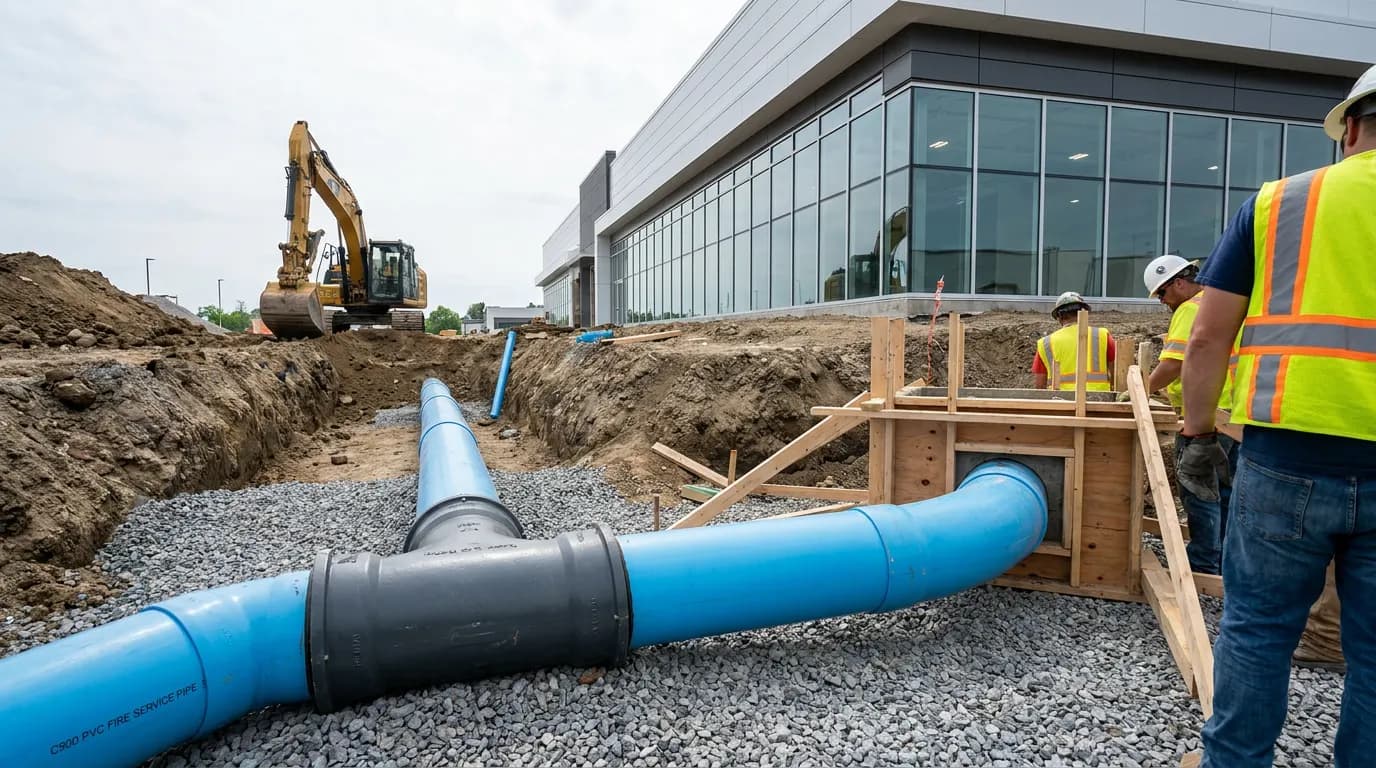
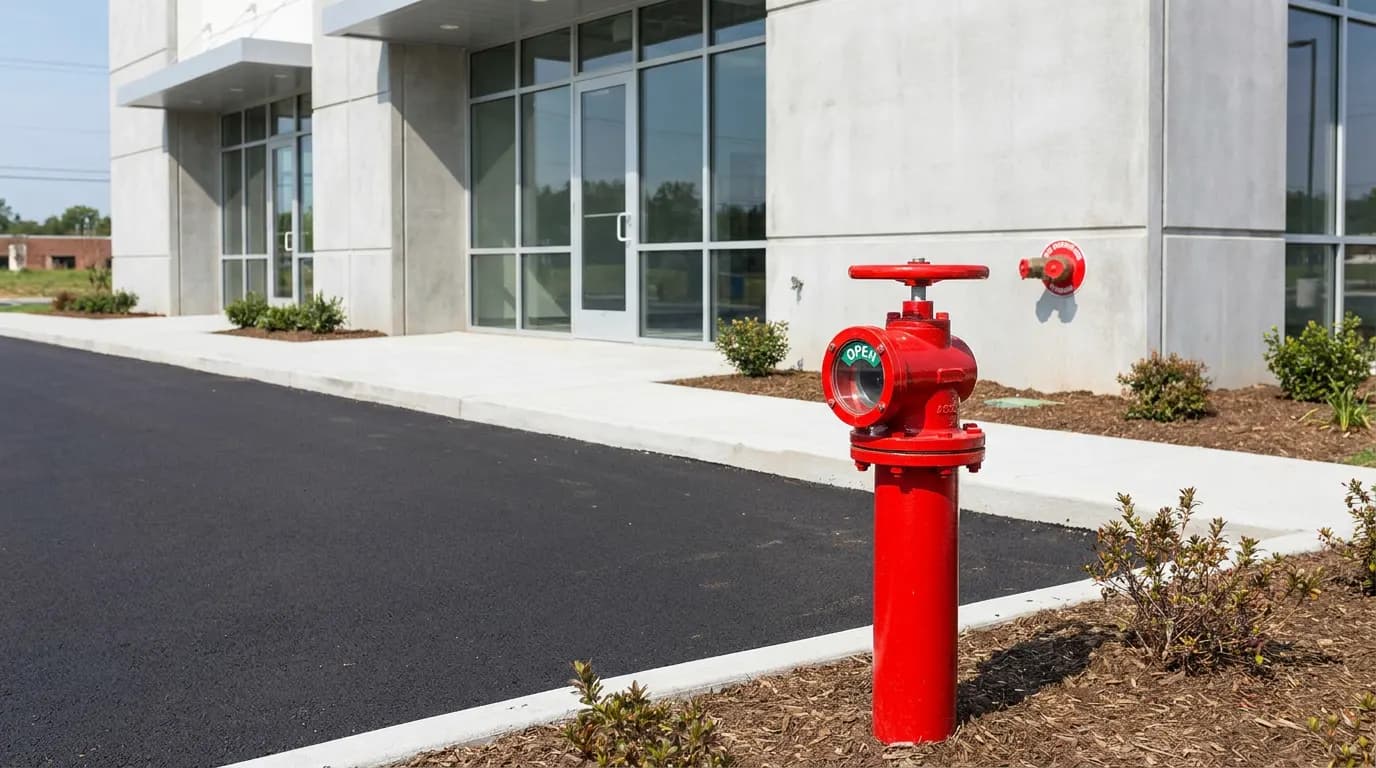
Most new commercial buildings need a dedicated fire line: a tap on the public water main, a backflow preventer, a control valve the fire department can see and operate (often a post indicator valve), and pipe to the base of the sprinkler riser inside the building. Larger sites add private hydrants and loops.
The water department sets the tap, meter and backflow rules; NFPA 24 covers the private fire main from there.
What goes into a good install
- Pipe listed for fire service, typically ductile iron or C900 PVC, sized from the hydraulic calculations.
- Enough cover to keep it below the frost line and away from traffic loads.
- Thrust blocks or restrained joints at every bend, tee and dead end, so the pipe doesn't pull apart under pressure.
- Clean bedding and backfill, and pipe kept capped and clean while the trench is open.
- Coordination with the site contractor so the line, the riser location and the building slab all match.
Flushing and testing
Before it's connected to the riser, the main is flushed at a flow high enough to carry out rocks, dirt and anything else that got in during construction, then hydrostatically tested at 200 psi for two hours. Underground pipe is allowed a small, calculated leakage; anything over that is found and fixed. The results go on the NFPA 24 contractor's material and test certificate.
We install underground fire mains as part of our sprinkler projects and as stand-alone work when a site needs the fire line done.
Questions owners ask
- Why does a fire line need to be flushed?
- Debris left in an underground main during construction would otherwise be carried into the sprinkler piping the first time water flows and can block sprinklers. NFPA 24 requires flushing before the connection to the riser.
- What pipe is used for underground fire mains?
- Most often ductile iron or C900 PVC listed for fire service, sized from the hydraulic calculations for the building.