
Standpipe inspection and testing: hose valves, pressure regulators and the five-year tests
Updated November 2026 · Bruhn & Bruhn Fire Protection
Standpipes, the hose connections in stairwells of multi-story buildings, get regular inspections of their valves and hose connections, flow tests of their pressure-regulating valves, and a flow test (and for dry standpipes a hydrostatic test) every five years.
What a standpipe is for
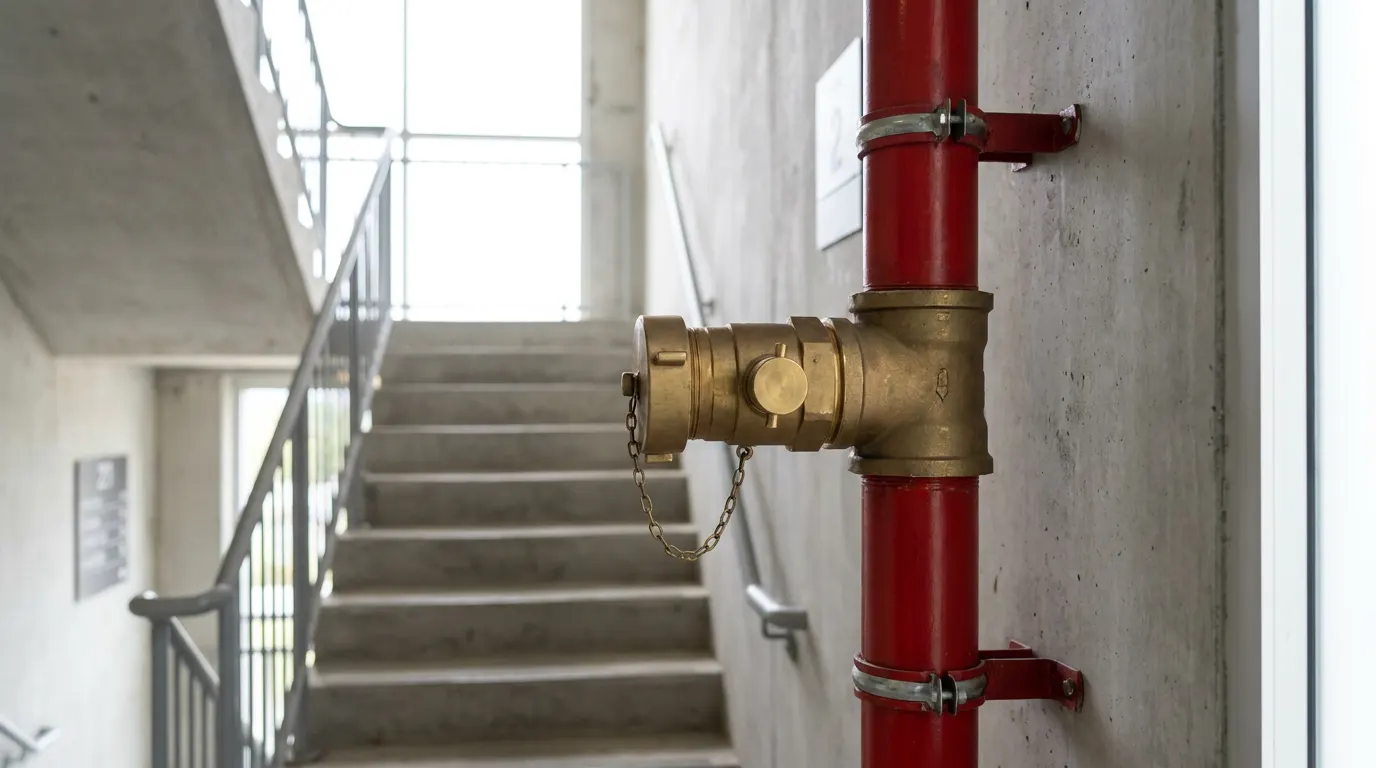
A standpipe is a riser with hose connections on each floor, usually in the stairwells, so firefighters can connect hose close to a fire instead of dragging it up from the street. Many are combined with the building's sprinkler system; some are fed only by the fire department through the fire department connection.
Because they sit unused for years, the things that fail are the ones nobody looks at: a hose valve that won't open, a missing cap, a pressure-regulating valve stuck shut, or a dry standpipe with a leak.
What gets inspected and tested
| What | How often |
|---|---|
| Control valves | Weekly if sealed; monthly if locked or electrically supervised |
| Hose connections: caps, threads, handles, obstructions | Inspected on the regular schedule |
| Pressure-regulating hose valves | Partial flow test annually; full flow test every 5 years |
| Flow test at the most remote hose connection | Every 5 years |
| Hydrostatic test of manual and dry standpipes | Every 5 years |
| Fire department connection | Quarterly inspection |
The five-year tests
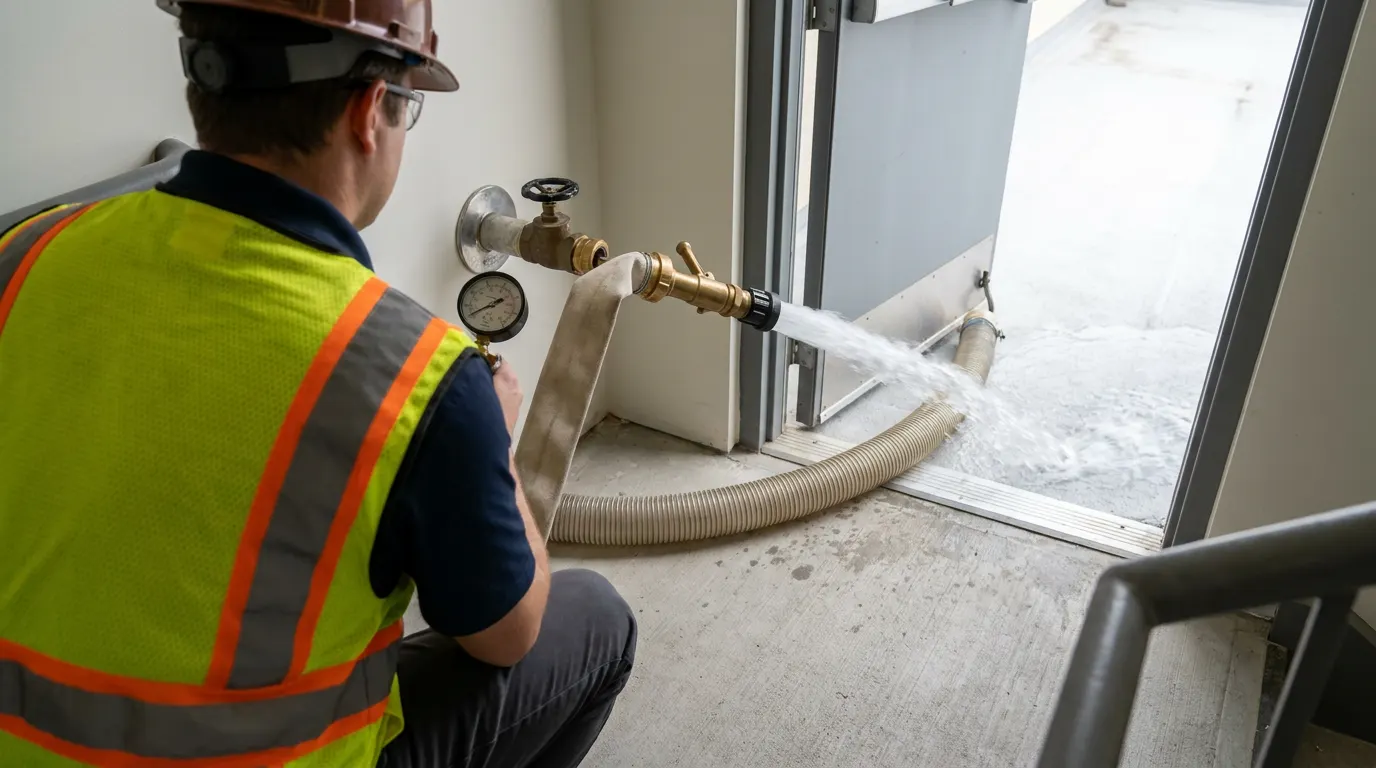
The flow test proves the standpipe can deliver the pressure and flow it was designed for at its hardest-to-reach connection, usually the top of the stairwell farthest from the supply. We flow water through a hose and nozzle or a test assembly, measure it, and compare it with the design.
Dry and manual standpipes, which only fill when the fire department pumps into them, also get a hydrostatic test: filled with water and held at pressure to show they don't leak. We plan where the water goes before we start, since a standpipe flow test moves a lot of it.
Frequencies here follow NFPA 25, 2023 edition. Your fire marshal or insurer may enforce a different edition or add requirements of their own; we'll tell you which applies to your building.
Questions owners ask
- How often does a standpipe need a flow test?
- Every five years under NFPA 25, at the hydraulically most remote hose connection. Dry and manual standpipes also get a hydrostatic test every five years.
- What's a pressure-regulating valve on a standpipe?
- A hose valve that limits pressure so a hose line is safe to handle on lower floors of a tall building. Because they can stick, NFPA 25 asks for a partial flow test every year and a full flow test every five.