
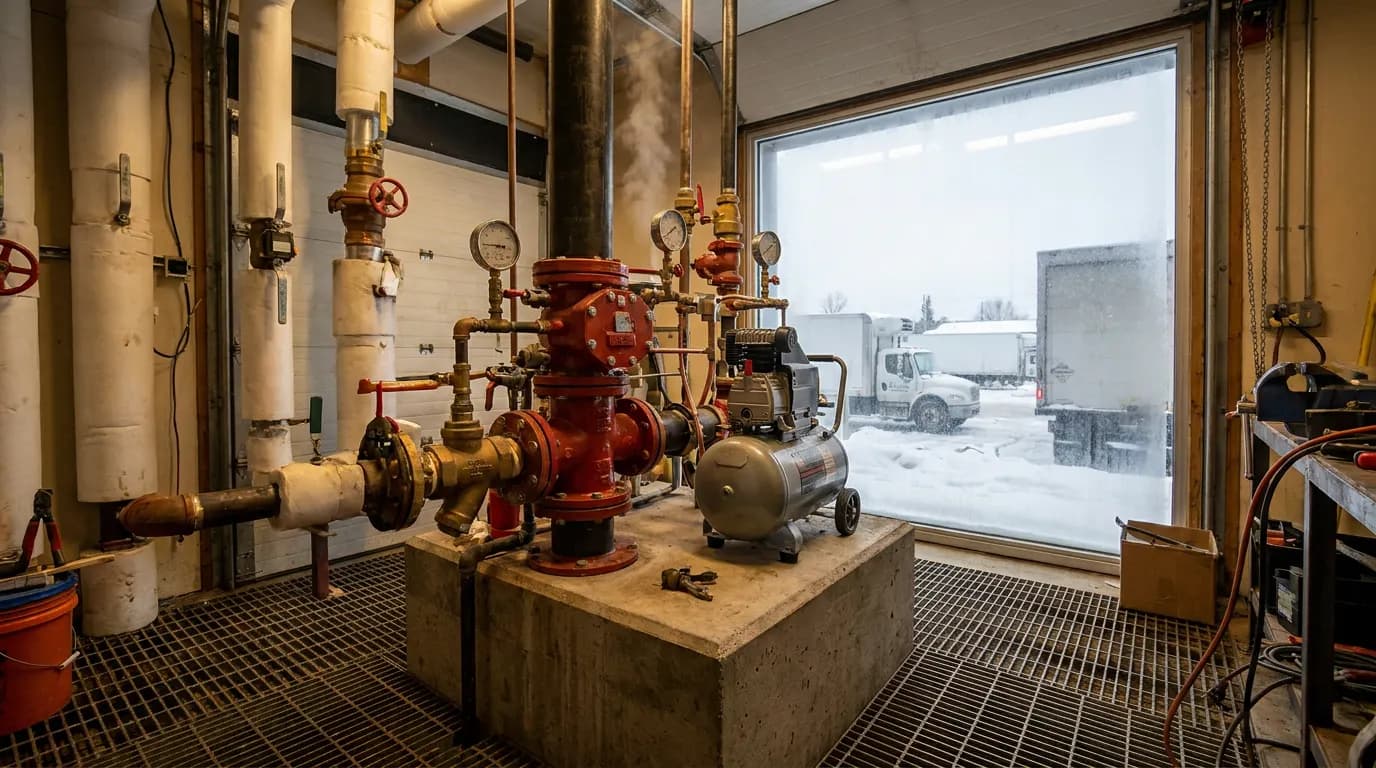
Getting a dry-pipe sprinkler system ready for winter
Updated November 2026 · Bruhn & Bruhn Fire Protection
Before the first hard freeze, drain the low points on a dry-pipe system, confirm the valve room stays at 40°F or above, and check that the air pressure and alarms are right. Most dry-system freeze breaks come from water left in the pipe.
Why a dry system can still freeze
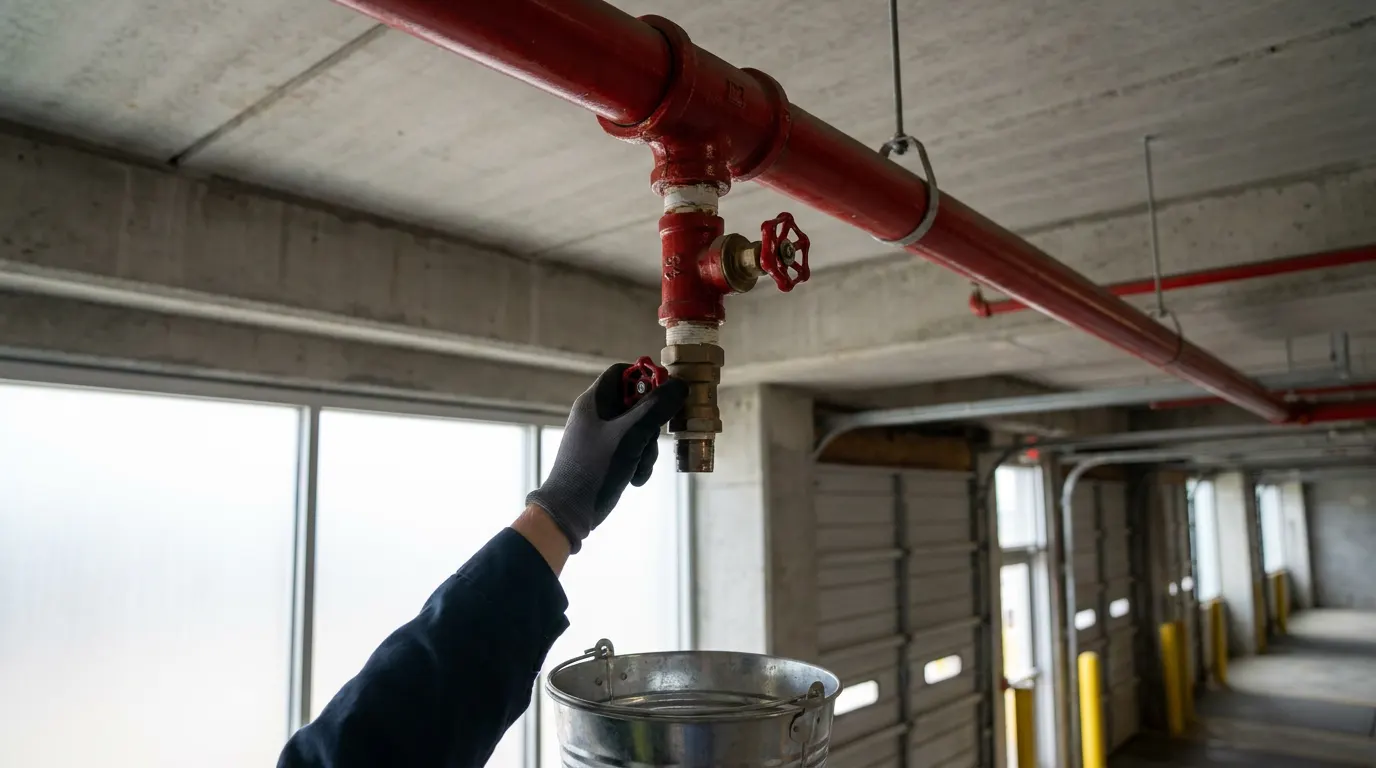
A dry-pipe system holds air, not water, in the pipe that runs through cold spaces: loading docks, unheated warehouses, attics and canopies. Water only enters when a sprinkler opens. But water gets in anyway: condensation from the compressed air, water left behind after a trip test, and small amounts that seep past the valve. It settles at the low points, freezes, and splits pipe or fittings.
The other common cause is the valve itself. The dry-pipe valve sits in a heated room with water on one side; if that room gets cold, the valve and the water supply pipe freeze.
Before freezing weather
- Drain every auxiliary drain (drum drip) at the system's low points, and keep doing it through the winter. NFPA 25 asks for it before the onset of freezing weather and after every time the system operates.
- Check that the valve room or enclosure holds at least 40°F, that its heater works, and that nothing (a propped door, a broken window, a turned-off unit heater) will let it get colder.
- Check the air or nitrogen pressure against the valve's required pressure, and that the compressor or nitrogen generator keeps up.
- Make sure the low-air alarm reaches the monitoring company, so a slow leak is caught before the valve trips.
- Look along the pipe in cold areas for low spots, sags and damage that would trap water.
The trip test and what follows it
NFPA 25 asks for a trip test of the dry-pipe valve every year, with a full-flow trip every three years, and the best time for it is warm weather, not the week before a freeze. A full-flow trip fills the system with water, so afterwards it has to be drained completely, every low point included, before the valve is reset. A trip test done in a hurry in the cold is one of the most common ways a dry system ends up full of ice.
Corrosion: the other dry-pipe problem
The oxygen and moisture in compressed air corrode the inside of dry pipe, and the scale it makes can block sprinklers and cause pinhole leaks. Switching the air supply to nitrogen from a generator slows that down considerably, and it's worth weighing on any system that has started to leak.
Frequencies here follow NFPA 25, 2023 edition. Your fire marshal or insurer may enforce a different edition or add requirements of their own; we'll tell you which applies to your building.
Questions owners ask
- How often should dry-pipe low point drains be drained?
- Before freezing weather and after every time the system operates, and through the winter as condensation collects. Buildings with a lot of condensation drain them weekly in cold weather.
- What temperature does a dry-pipe valve room need to be?
- At least 40°F. NFPA 25 asks for the enclosure to be checked during cold weather to make sure it stays there.
- Can a dry-pipe system be switched to nitrogen?
- Yes. A nitrogen generator replaces or supplements the air compressor and fills the pipe with nitrogen, which slows internal corrosion. We can size one for the system.