
Fire flow tests: how we find out what the water supply can do
Updated November 2026 · Bruhn & Bruhn Fire Protection
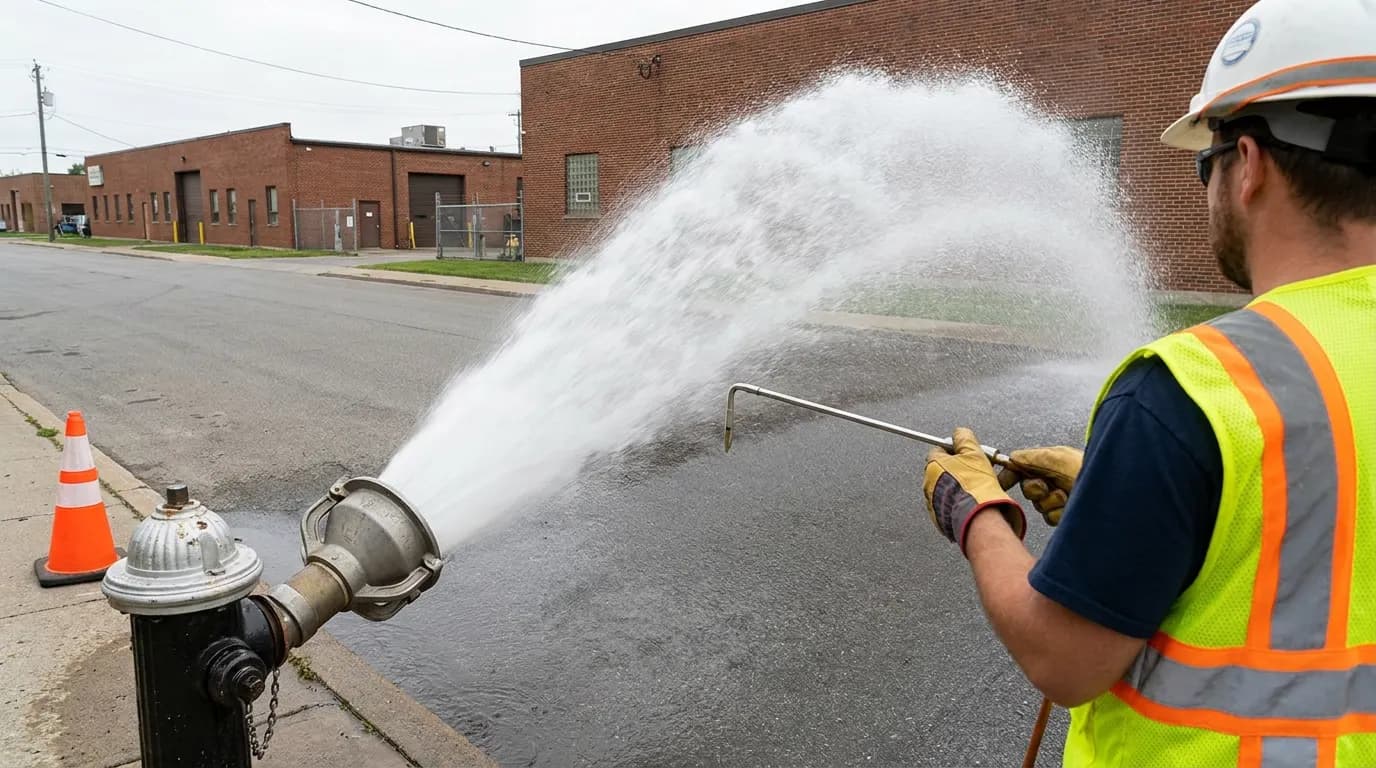
A fire flow test measures how much water the public main can deliver and at what pressure, using one hydrant to read pressure and another to flow water. Every sprinkler design is checked against that result, so it needs to be recent and done near the site.
Why the design starts here
A sprinkler system is only as good as the water behind it. The hydraulic calculations show how much flow and pressure the sprinklers need; the flow test shows what the city main can supply. If the supply falls short, the design has to change, with bigger pipe or a fire pump, and it's far cheaper to learn that before the drawings are done.
How the test is done
- Coordinated with the water department, which may run the test itself or send someone to watch.
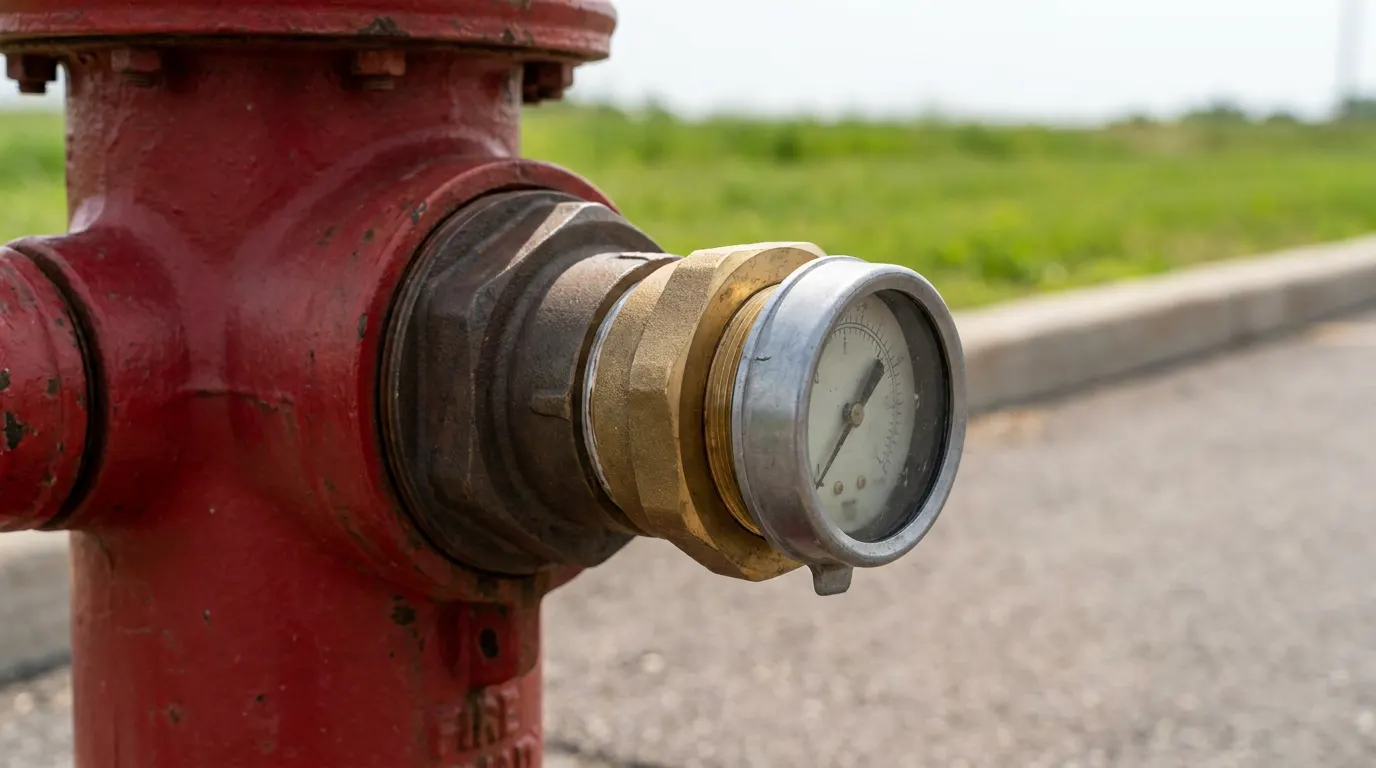
- A gauge on a test hydrant reads the static pressure with no water flowing.
- One or more flow hydrants downstream are opened, the flow is measured with a pitot gauge, and the test hydrant's residual pressure is read at the same time.
- The static pressure, residual pressure and flow give a water supply curve, plotted against the system's demand on the hydraulic graph.
What to watch for
Results change over time as a town grows, so reviewers generally want recent data, often from within the past year. A test done at night or in winter can look better than the same main at peak summer demand, so we leave a safety margin between supply and demand. And the water has to go somewhere: we plan the flow so it doesn't flood a street or a neighbor.
The test procedure follows NFPA 291; the reviewing fire marshal decides how old the data can be.
Questions owners ask
- How old can fire flow test data be for a sprinkler design?
- It depends on the reviewing authority, but most want data from within roughly the last year, taken near the site.
- What if the flow test shows the water supply isn't enough?
- The design changes: larger pipe to cut friction loss, a different system layout, or a fire pump to add pressure. We'd show the options and their costs.