
Acceptance testing a new fire sprinkler system: what happens before occupancy
Updated November 2026 · Bruhn & Bruhn Fire Protection
Before a new sprinkler system is accepted, the underground is flushed, the piping is hydrostatically tested, the alarms, drains and any dry or pump equipment are tested, and the results go on the contractor's material and test certificates for the fire marshal and owner.
Why it matters to the schedule
Acceptance testing is often the last thing between a building and its certificate of occupancy, and it needs the fire marshal, the general contractor, the alarm contractor and sometimes the water department in the same place on the same day. Planning it early keeps it from holding up the finish.
The tests
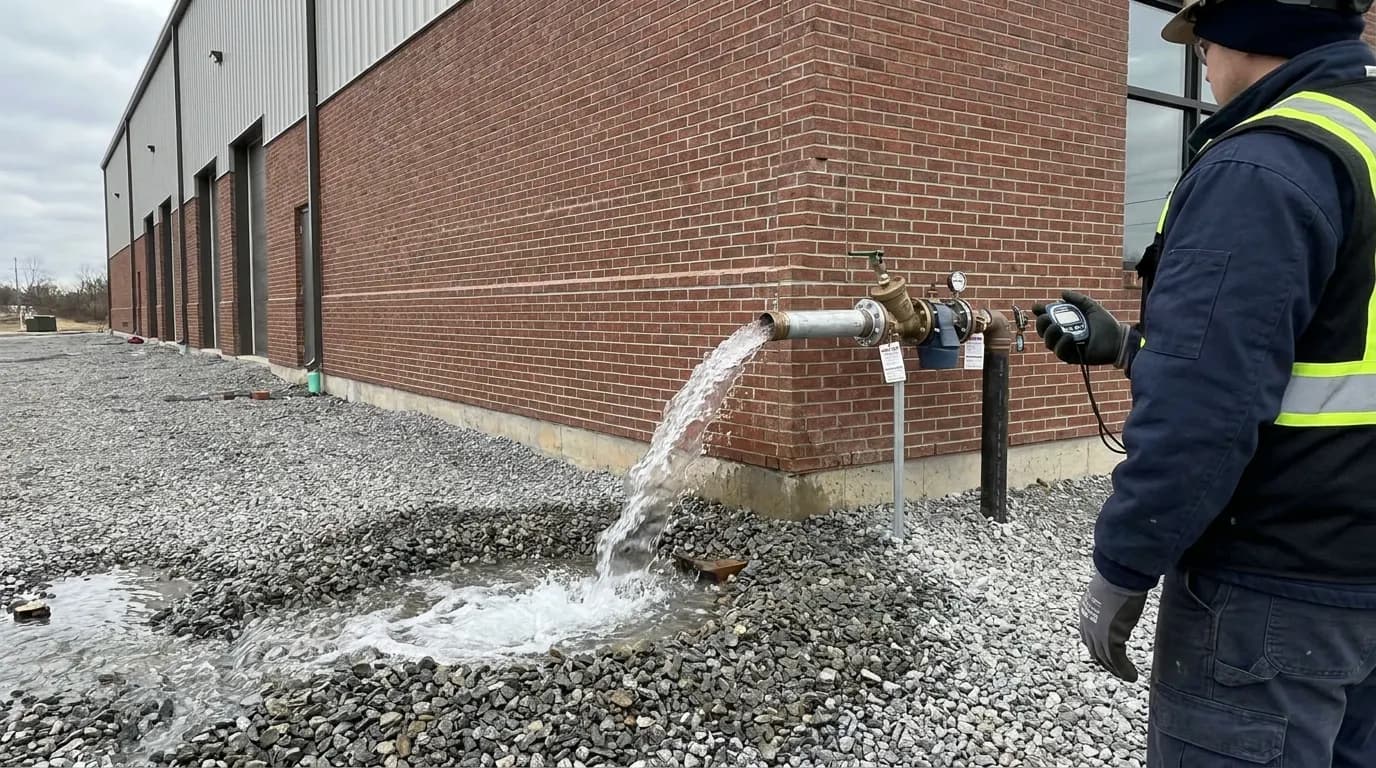
- Underground flush: the fire service main is flushed at a high flow before it's connected to the sprinkler riser, so construction debris never reaches the sprinklers.
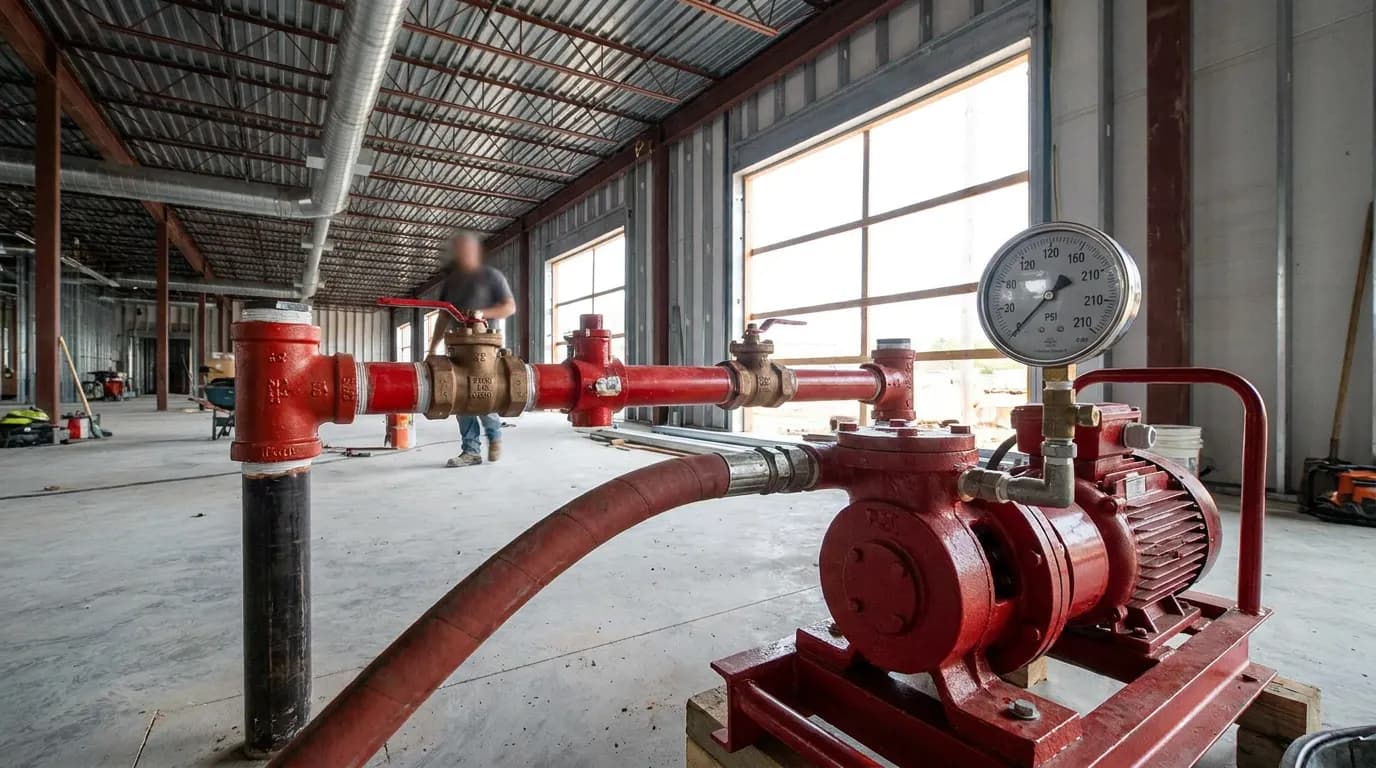
- Hydrostatic test: new piping is filled and held at 200 psi (or 50 psi above the highest static pressure, where that's higher) for two hours. Aboveground pipe must show no leaks; underground has a small allowable leakage.
- Alarms: water is flowed through the inspector's test connection to prove the waterflow alarm reaches the monitoring company, and valve tamper switches are checked.
- Main drain test: run and recorded as the baseline every later annual test is compared with.
- Dry-pipe, preaction and fire pump systems get their own trip, flow and controller tests on top.
The paperwork
NFPA 13 and NFPA 24 each have a contractor's material and test certificate, one for aboveground piping and one for underground, that records what was installed and how it tested. The fire marshal and the owner both get copies, and the owner should keep them with the as-built drawings: they're the starting point for every inspection after.
Requirements here follow the NFPA 13 and NFPA 24 editions in common use; the fire marshal reviewing the project decides which edition applies, and we work to it.
Questions owners ask
- What pressure is a new sprinkler system tested at?
- 200 psi for two hours, or 50 psi above the maximum static pressure where that's higher than 150 psi, under NFPA 13.
- Who needs to be at the acceptance test?
- The sprinkler contractor and usually the fire marshal or their inspector, plus the general contractor and the alarm contractor so the alarm signals can be confirmed.